Digital & Production Design for Copyleaks
Role: Digital Designer · Client: Copyleaks
Copyleaks is an AI-powered content detection and integrity platform serving enterprise and education markets. As a freelance Digital Designer, I worked across web design, marketing collateral, and long-form content, creating and adapting materials within the company’s existing visual framework. My work ranged from researching and designing new content experiences in Figma to producing white papers and flyers for different audiences and use cases. Across projects, I focused on organizing complex information, maintaining visual consistency, and developing reusable layouts that could support future content.
Web Design
Blog
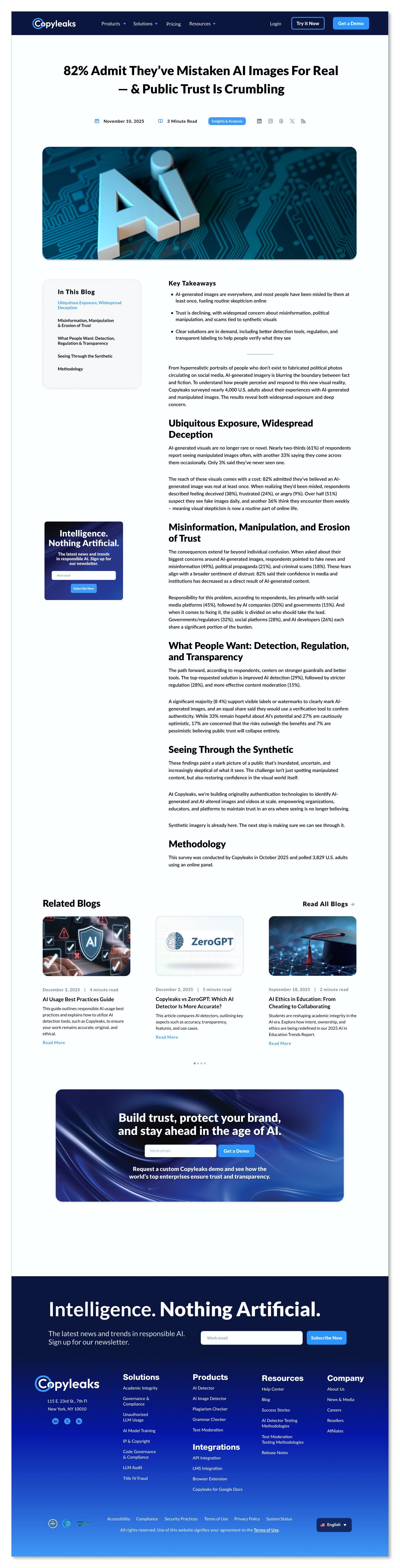
I redesigned the Copyleaks blog template to improve readability, strengthen the visual hierarchy, and make long-form content easier to navigate. I began by auditing the existing page to identify usability and readability issues, then researched blogs from other SaaS companies and presented examples and findings to the team. Working from the creative brief, I developed multiple concepts in Figma and explored different page structures, content treatments, and left- and right-rail layouts.
The redesign establishes a clearer hierarchy at the top of each article, separating the headline and supporting metadata from the hero image so essential information remains easy to read. The template brings the Table of Contents and Key Takeaways forward, giving readers quick ways to understand and navigate the article while maintaining a focused column for the long-form content itself.
I adapted an existing, internally approved visual treatment to create an email signup module and a coordinating Get a Demo CTA, giving the two conversion points a consistent look within the new template. I also redesigned the Related Blogs section and added a link to the full blog archive, providing additional paths for readers to continue exploring Copyleaks content.
After several rounds of exploration and stakeholder feedback, I refined the selected direction and adapted the final design for desktop, tablet, and mobile layouts.
Success Stories
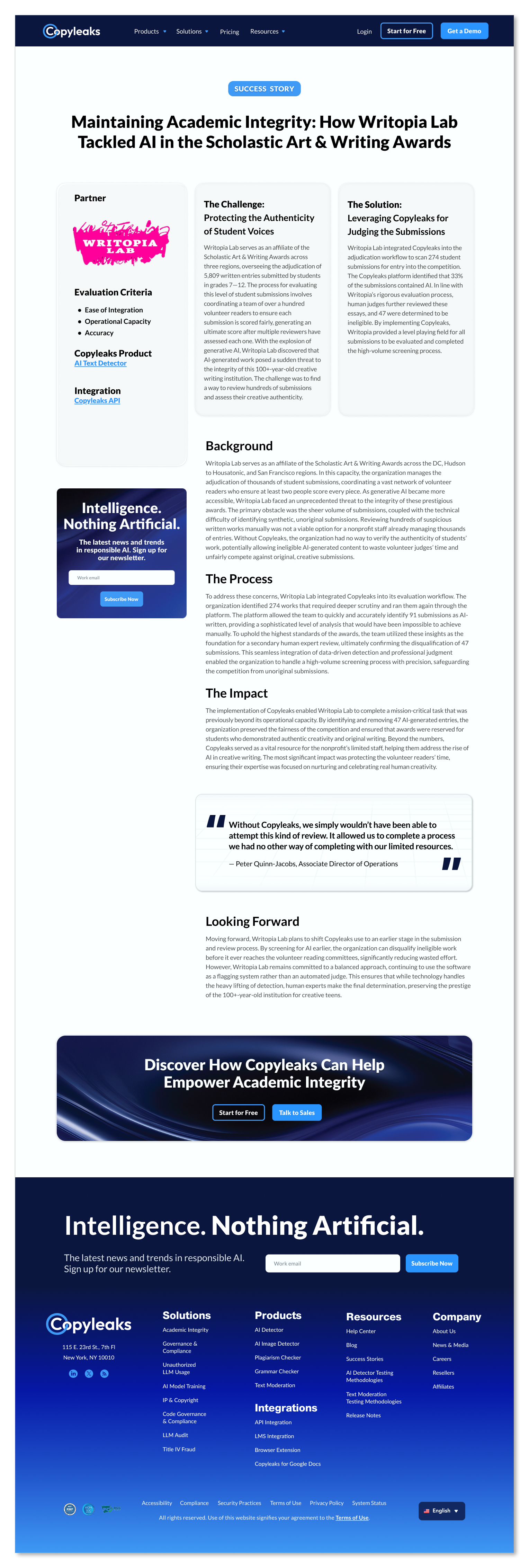
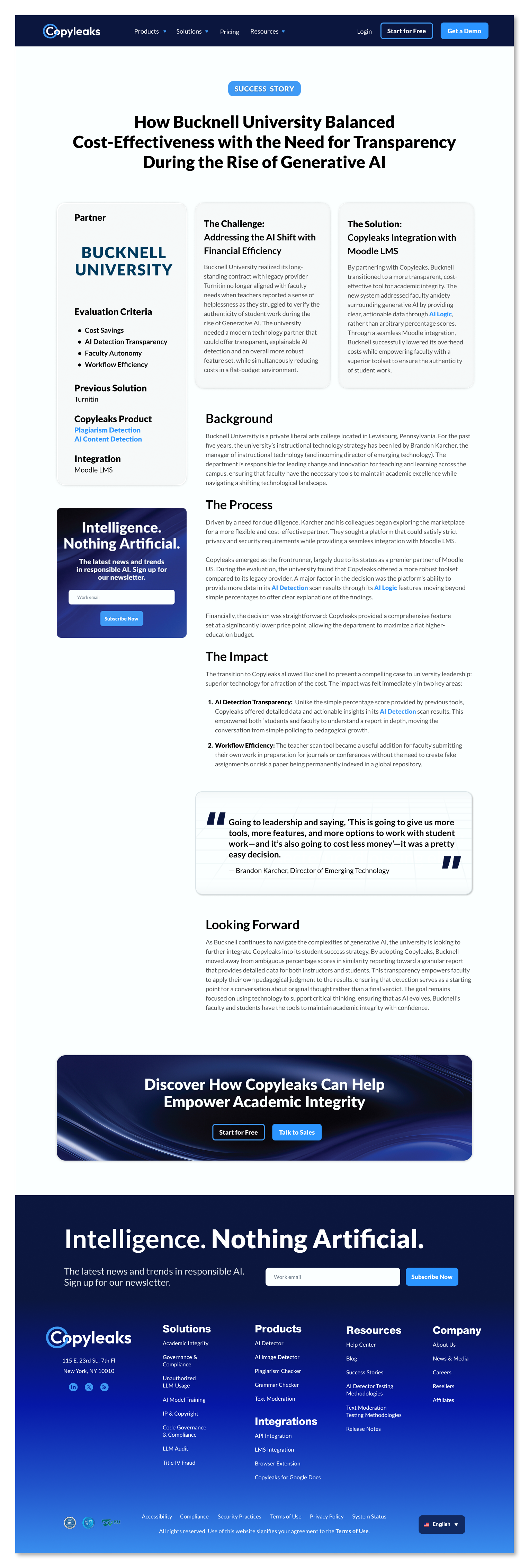
I created a reusable template for Copyleaks Success Stories, building on the visual system established across the other redesigned content pages. Working from the creative brief and provided visual direction, I translated the layout into Figma and carried established treatments—including rounded cards, the left-rail email signup module, and CTA styling—into the new format.
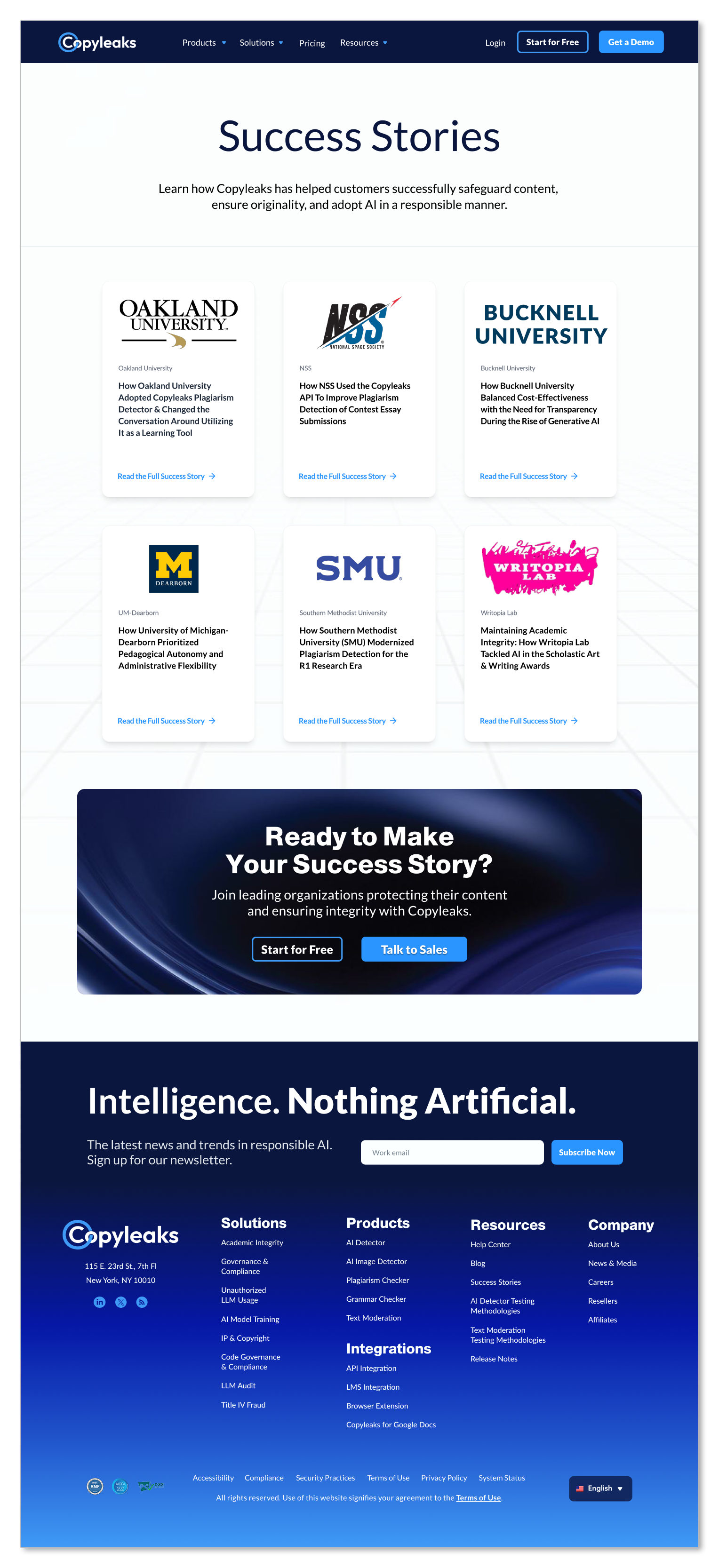
Once the template was finalized, I used it to redesign approximately eight existing Success Stories, creating a consistent structure that could accommodate different customer narratives and content lengths. I then designed the Success Stories hub, using the card-based layout established for the Press Center to create a scannable index of customer stories.
Title IV AI Fraud Detection
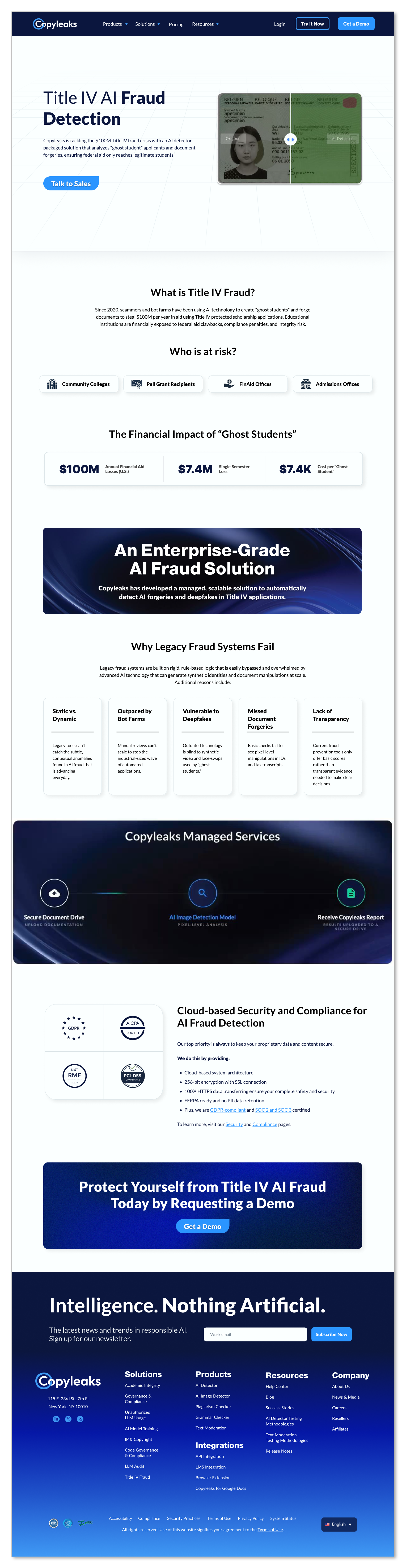
Working on a tight turnaround, I designed a landing page for Copyleaks’ Title IV fraud detection managed service, translating a dense, text-heavy brief into a clear visual hierarchy. I organized the content into scannable sections highlighting the audiences at risk, financial impact, limitations of legacy fraud systems, the managed-service process, and security and compliance. Key statistics were pulled forward as visual callouts, while custom icons and card-based layouts helped break complex information into more digestible pieces.
To keep the page consistent with the evolving Copyleaks visual language, I incorporated existing brand assets and treatments—including the interactive hero imagery, button styles, and presentation of security certifications—while creating new icons and adapting the card system used elsewhere in the site. I built the layout in Figma with careful attention to consistent spacing, alignment, and responsive behavior.
Press Center
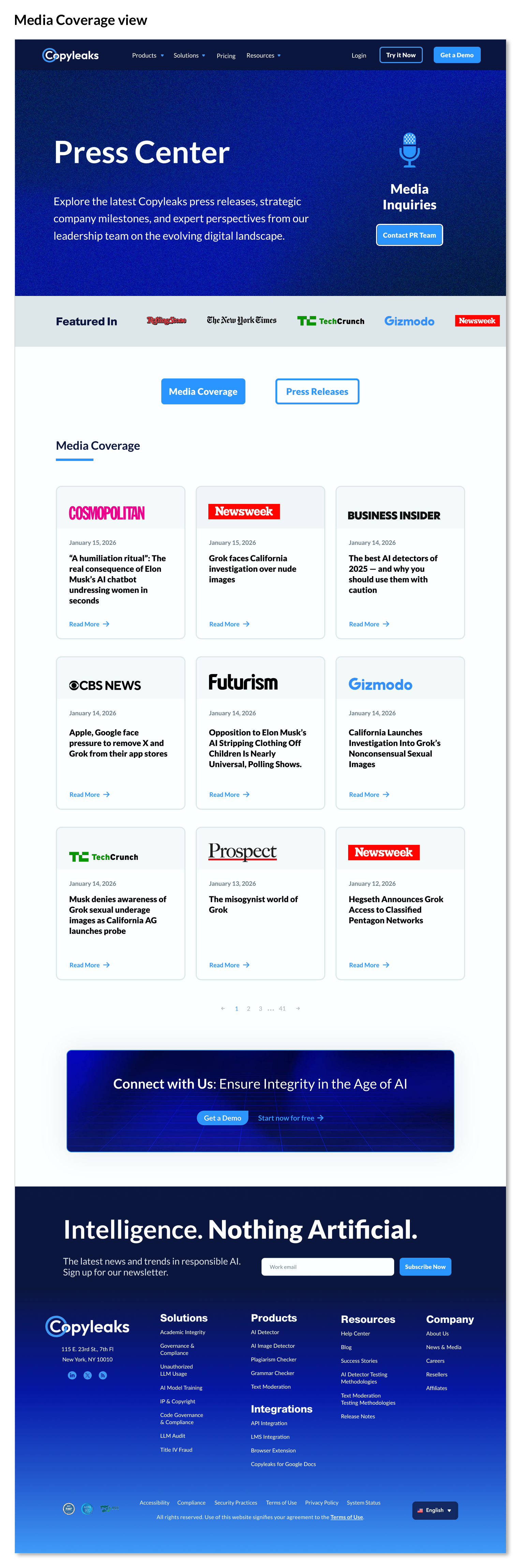
I redesigned the Copyleaks Press Center to make a large archive of media coverage and company press releases easier to browse. Working from a creative brief, the existing Press Center, and several reference sites, I researched how other SaaS companies organized similar content. I presented additional examples and findings to the team, then developed several concepts in Figma, exploring different layouts and lighter and darker visual approaches.
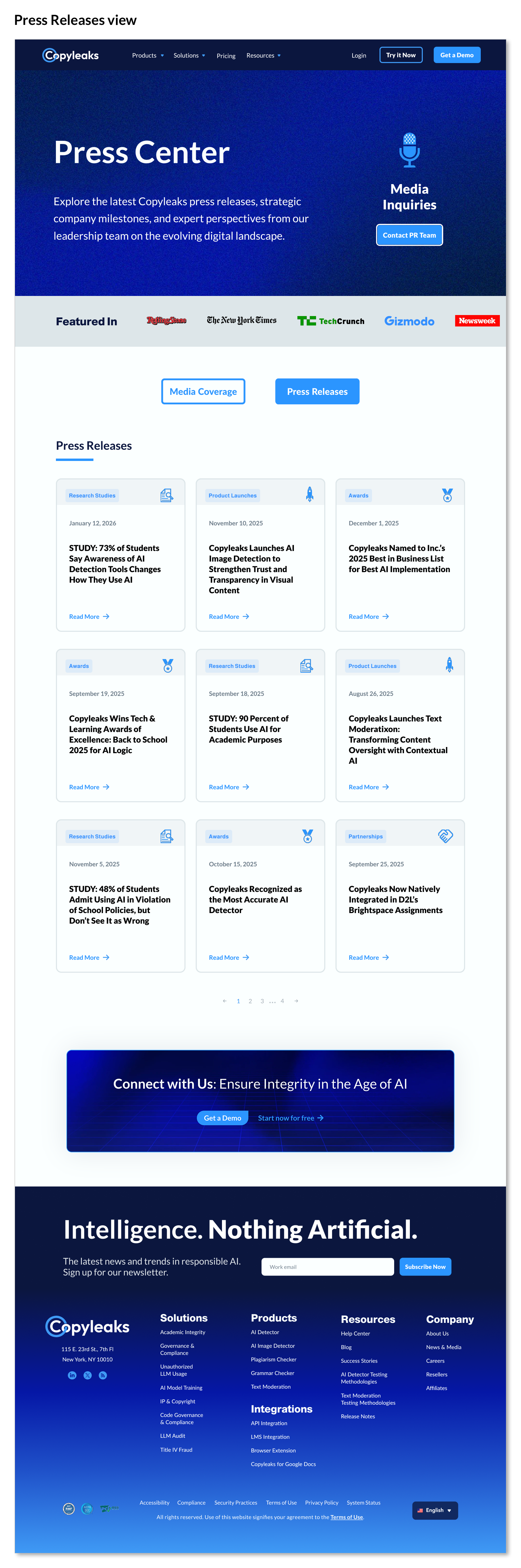
Rather than sending visitors to separate archive pages, I brought Media Coverage and Press Releases into two views within the main Press Center, allowing users to move directly between them through tabbed navigation. I developed a consistent three-column card system for both content types, with pagination to make the extensive archive manageable—Media Coverage alone extended to more than 40 pages.
The two views share the same underlying card structure while remaining visually distinct: publication logos identify Media Coverage, while tags and custom icons created in Illustrator differentiate Press Releases. I carried the rounded card treatment over from the Blog redesign, helping establish a consistent visual language across the new Copyleaks content pages. After several rounds of team feedback and refinement, I prepared the final Figma designs and specifications for developer handoff.
White Papers
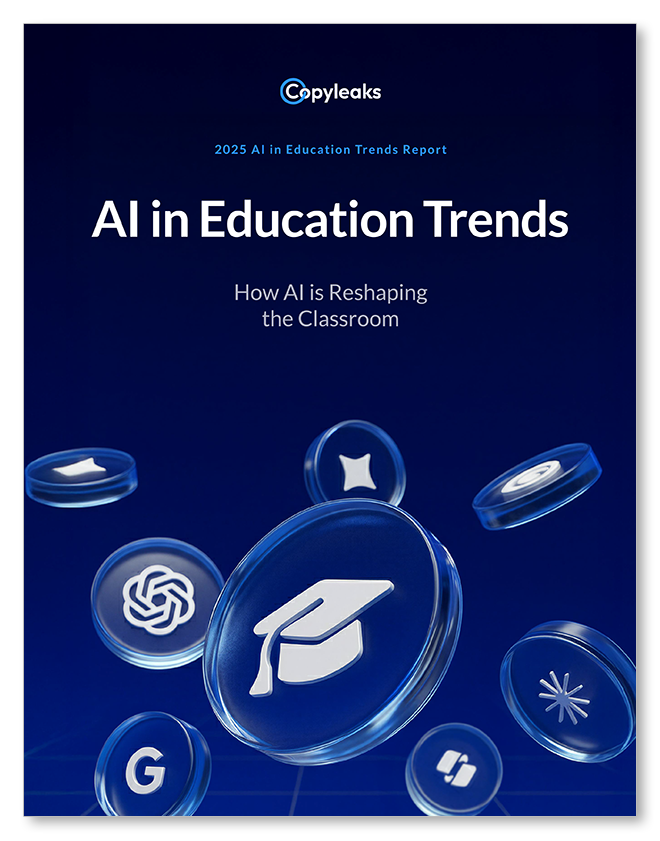
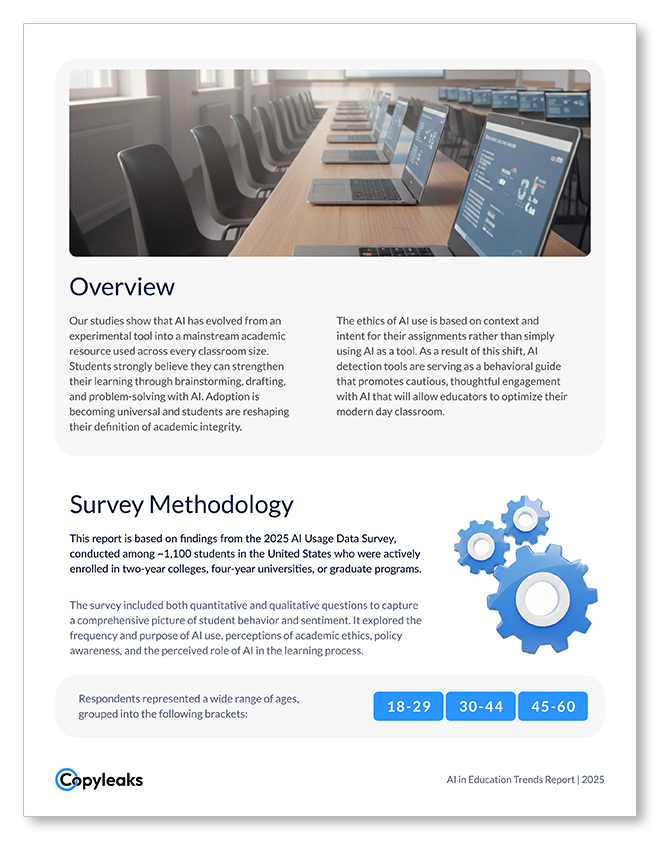
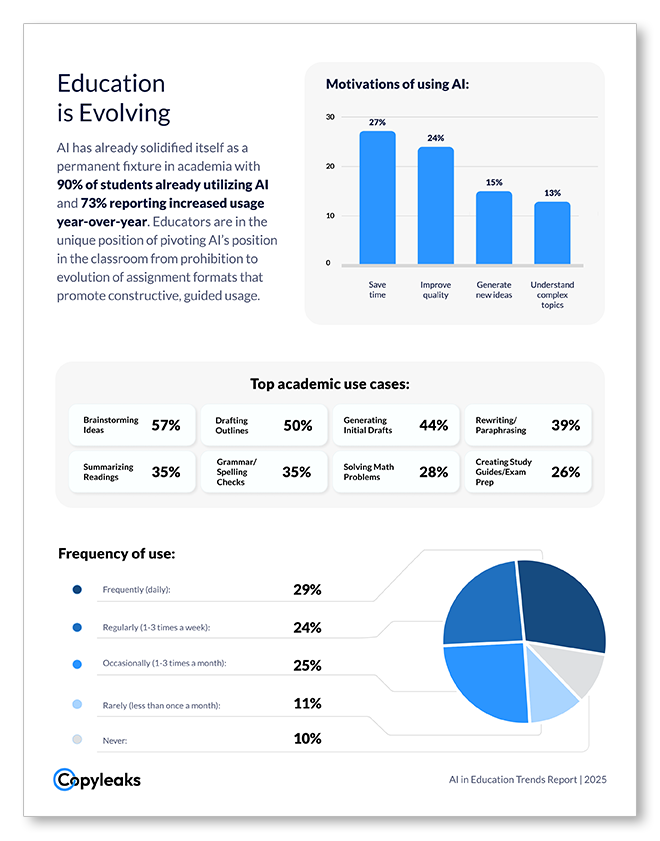
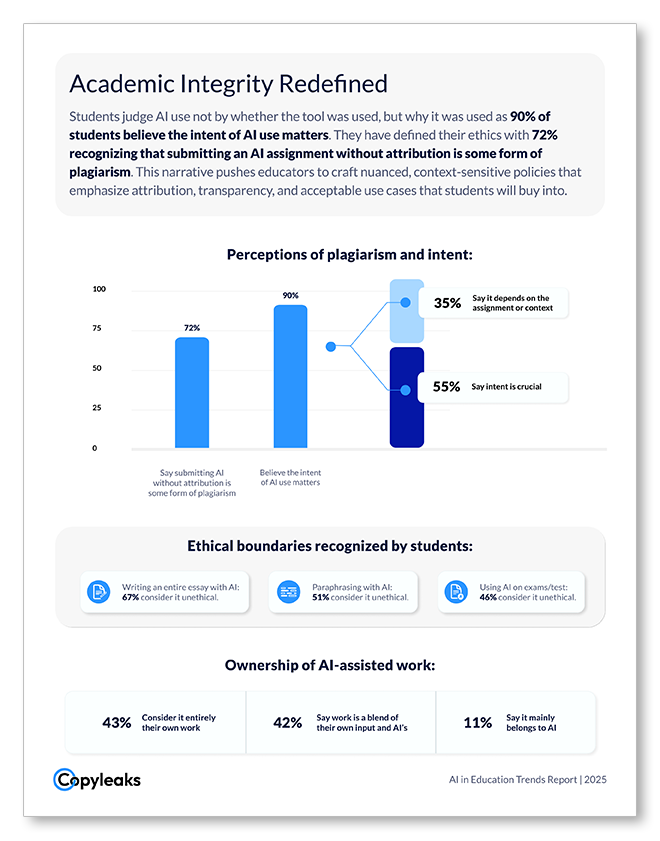
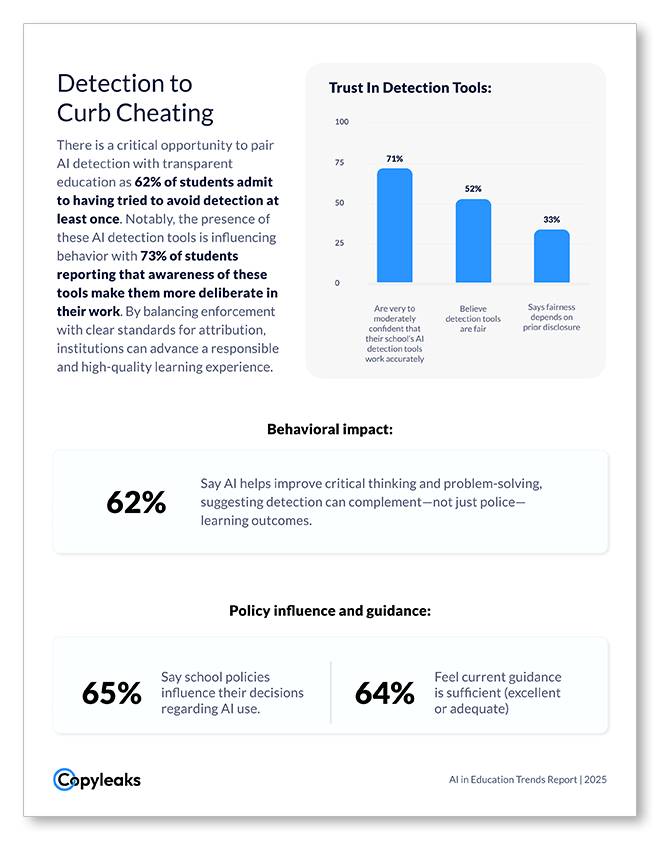
Working within an established Copyleaks report template, I laid out long-form research content and translated supplied data into polished, on-brand visualizations in Figma. I determined how the copy, statistics, charts, and supporting imagery would work within the existing page system, adapting the material to make dense research findings easier to scan and understand.
I maintained consistent typography, spacing, color, and graphic treatments throughout the layouts while adapting the template to accommodate different types and amounts of content.
Flyers
Secure On-Premises
AI Detection
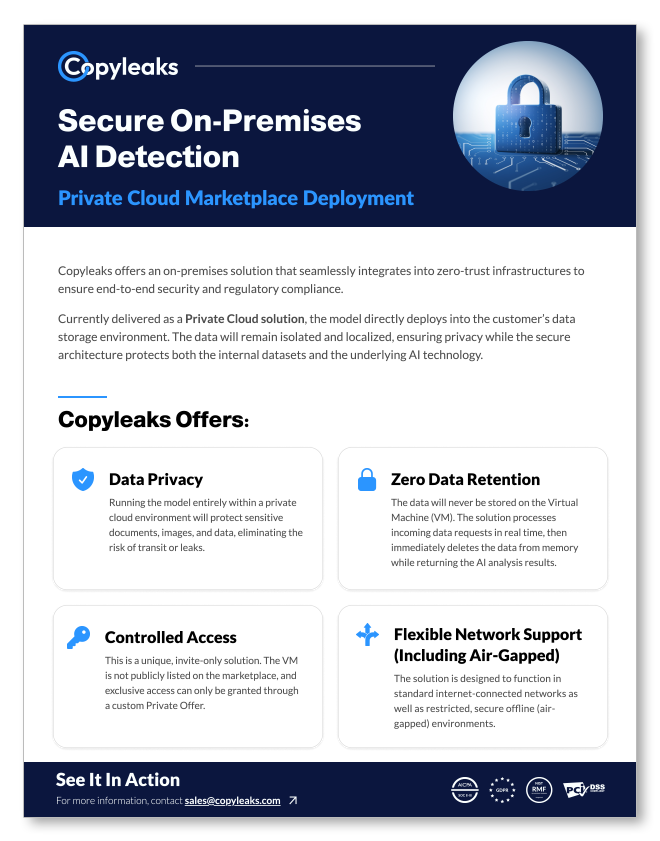
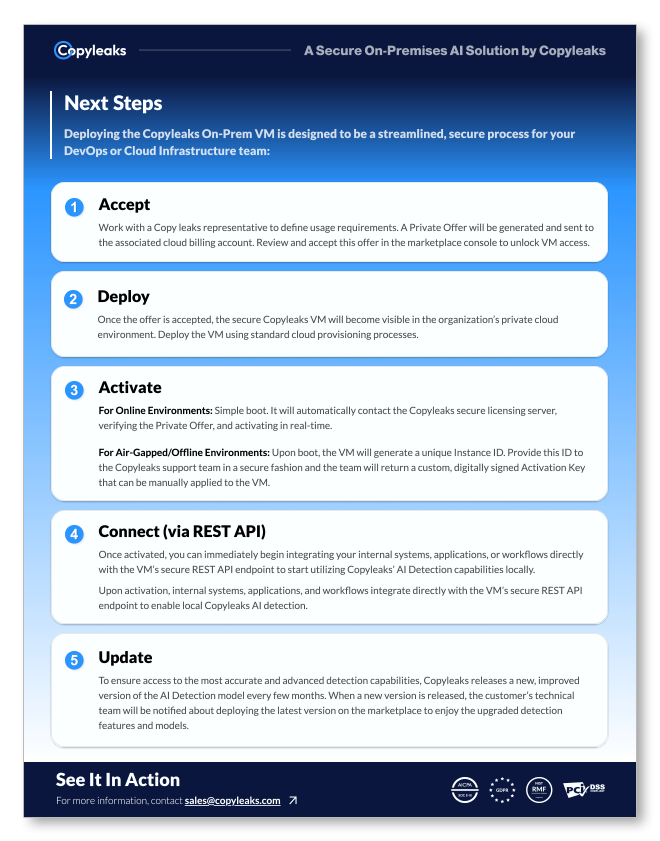
Working from supplied copy and an established Copyleaks one-pager format, I designed this two-page flyer to introduce the company’s private cloud AI detection offering.
I adapted the content to the existing visual structure, developing supporting imagery and graphics while carrying established Copyleaks design treatments throughout the piece.
For the implementation steps on the second page, I incorporated a gradient treatment I had developed for other Copyleaks materials, using the shift from dark navy to brighter blue to add depth and movement while maintaining legibility throughout the page.
AI Image Detector
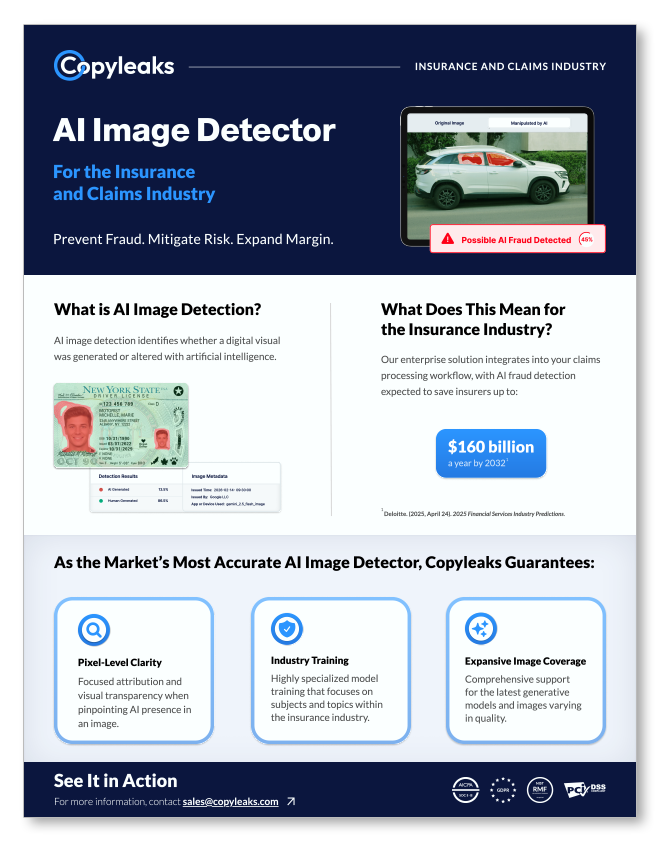
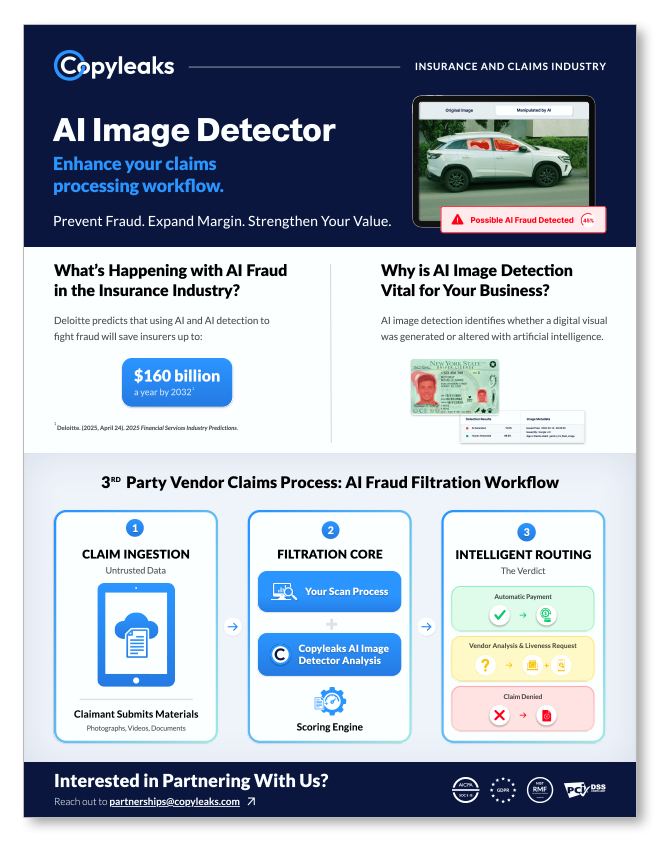
I created two versions of an AI Image Detector flyer for the insurance and claims industry, adapting the same visual framework for different audiences and messaging. Using an existing Copyleaks flyer structure, I organized the supplied content, statistics, and product information into a consistent hierarchy while tailoring each version to its specific use case.
For the partner-focused version, I translated a rough concept into a visual workflow showing how AI fraud detection could fit into a third-party vendor claims process. I developed the diagram and supporting graphics in Figma, then carried the established typography, color, and layout treatments across both versions to keep them visually connected.
Google Classroom Integration
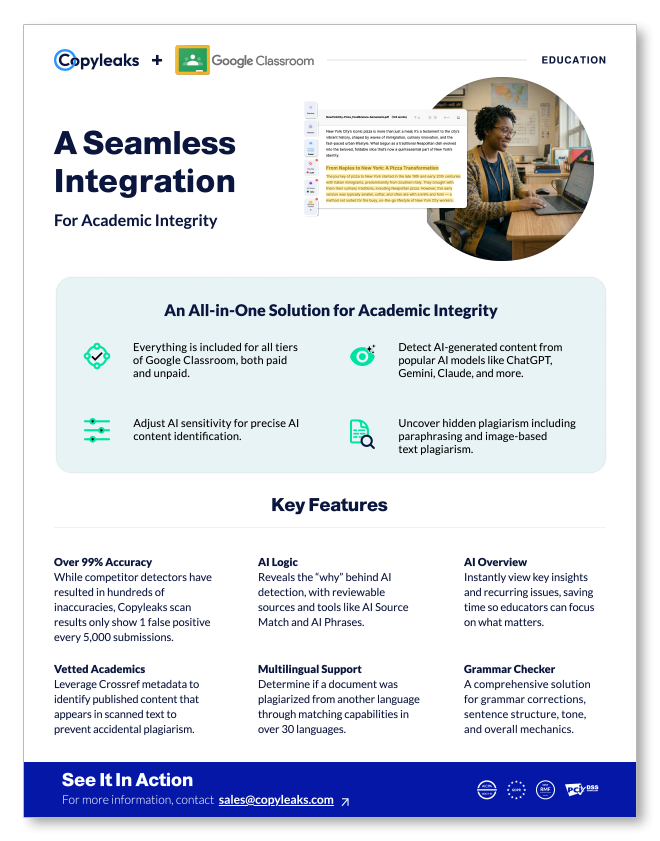
I adapted an established Copyleaks one-pager format to promote the company’s integration with Google Classroom, organizing supplied content into a clear hierarchy of product benefits and key features. I carried existing Copyleaks design treatments throughout the piece while incorporating Google Classroom branding, creating a cohesive piece that fit within the broader family of marketing materials.